Invest
Why invest in Gabon
Location, the CEMAC regional market, a currency pegged to the euro, natural resources and the Nkok economic zone: Gabon's assets, presented with their sources.
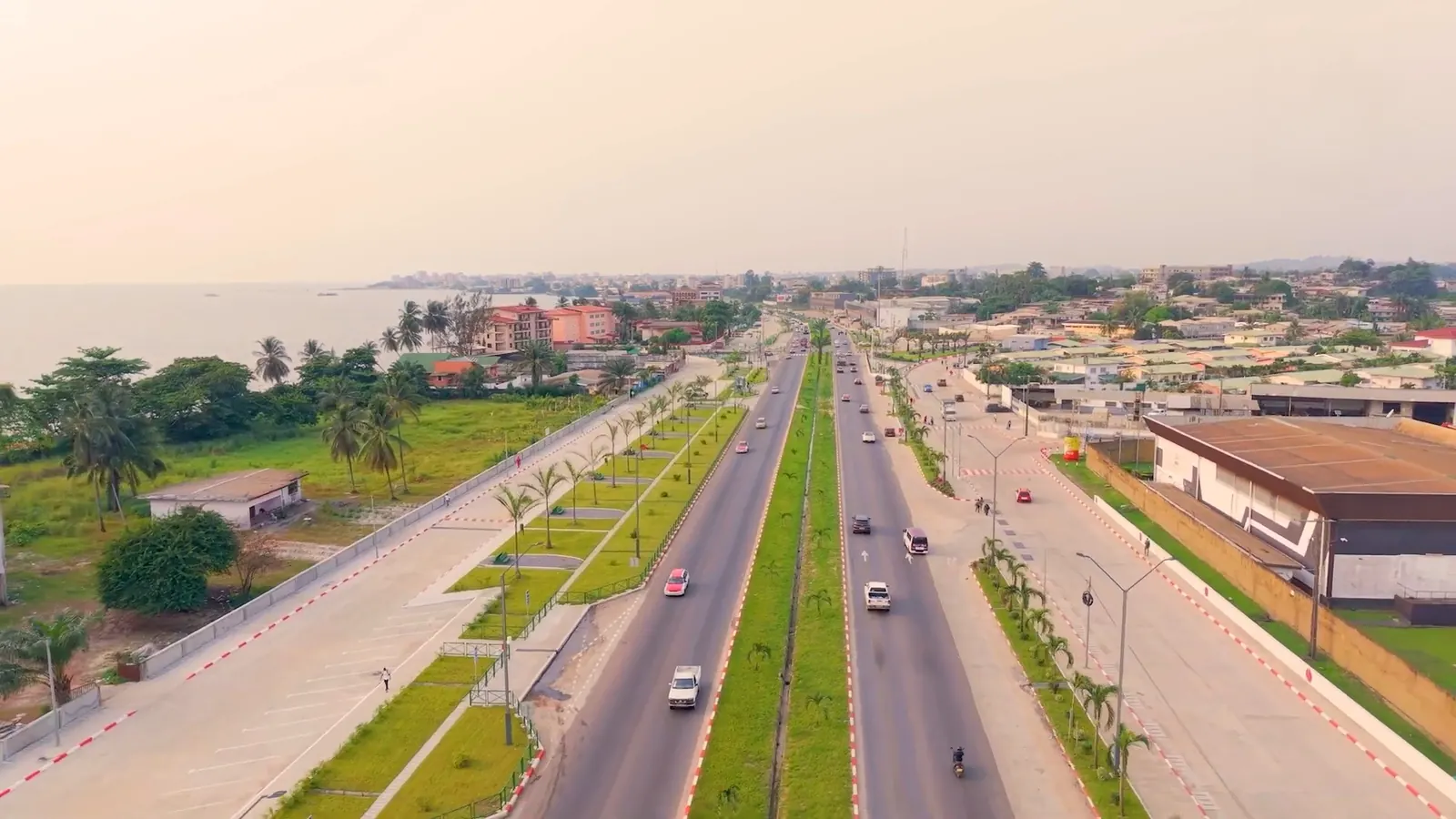
Gabon lies on the Atlantic coast of Central Africa, straddling the equator. It borders Cameroon, Equatorial Guinea and the Republic of the Congo. Its coastline, the ports of Owendo and Port-Gentil and the Trans-Gabon railway, which links Libreville to Franceville, make it a gateway to the interior of the subregion.
This page brings together the facts an investor needs when assessing the country: market size, monetary framework, natural resources, economic zones and membership of regional and international groupings. Every figure is shown with its source and year.
Gabon in figures
Population
2,593,130 inhabitants
2025
Nominal GDP
21.6 billion US dollars
2025 (estimation)
GDP per capita
8,263 current US dollars
2025
Forest cover
91.2 % of land area
2023
Foreign direct investment, net inflows
1.14 billion US dollars
2024
Exports of goods and services
55.5 % of GDP
2025
Macroeconomic indicators
Real GDP growth
2.7 %
2026 (estimate)
Source: International Monetary Fund
Inflation (consumer prices)
2.5 %
2026 (estimate)
Source: International Monetary Fund
GDP per capita
8,263 USD
2025
Source: World Bank
Gross public debt
86.1 % of GDP
2026 (estimate)
Source: International Monetary Fund
A regional market: CEMAC
Gabon is a member of the Central African Economic and Monetary Community (CEMAC), which groups six states: Cameroon, the Central African Republic, Chad, the Congo, Equatorial Guinea and Gabon. They share a central bank, the Bank of Central African States (BEAC), a common external tariff and a community customs code. A company based in Gabon can therefore plan at the scale of this regional market.
The country also applies the harmonised business law of the Organisation for the Harmonisation of Business Law in Africa (OHADA), which has 17 member states. OHADA uniform acts (commercial companies, securities, accounting, arbitration) provide an identical legal framework across these countries.
A currency pegged to the euro
Gabon's currency is the Central African CFA franc (code XAF), issued by the BEAC. According to the BEAC, it has been pegged to the euro since 1 January 1999 at a fixed rate of 1 euro = 655.957 CFA francs, and its external convertibility is guaranteed by the French Treasury. The fixed parity limits exchange rate risk on flows denominated in euros. Transfers abroad remain governed by the CEMAC foreign exchange regulation (see the investor guide).
Significant natural resources
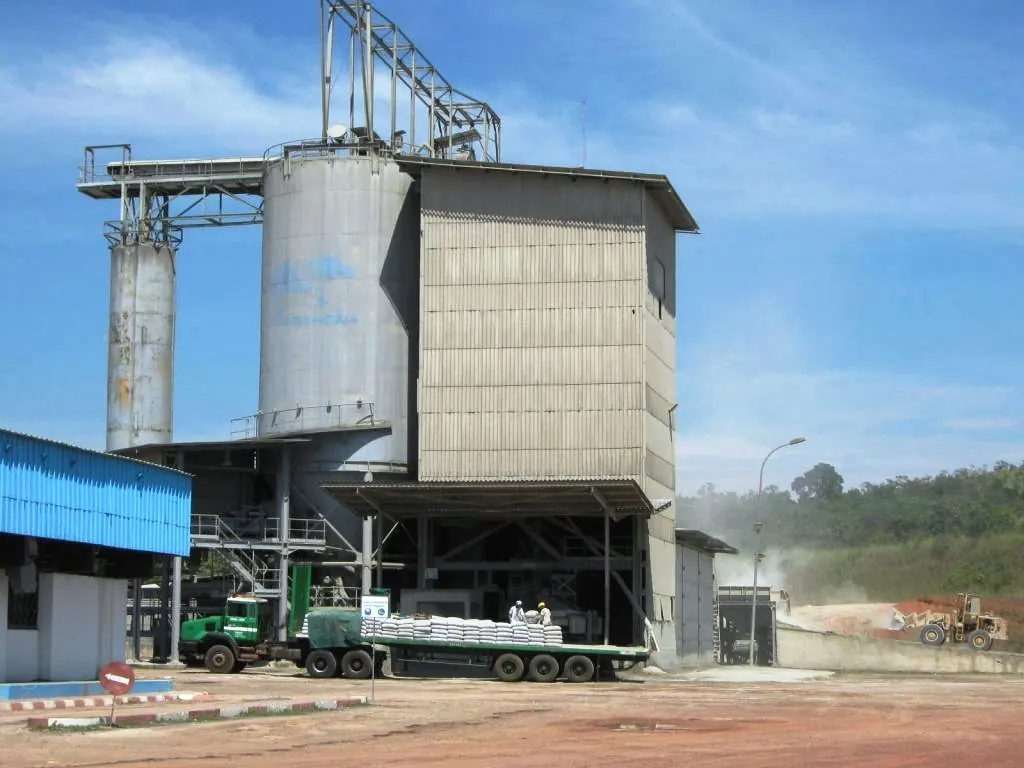
Gabon's economy relies on oil, manganese and timber. According to Gabonreview, the country is the world's second-largest manganese producer, and forest covers more than 90% of its land according to the World Bank. The government aims to increase local processing of these resources: according to Gabonreview, the Council of Ministers of 30 May 2025 decided to ban exports of unprocessed manganese from 1 January 2029, after a transition period for operators.
The Nkok special economic zone
The Nkok special economic zone, managed by Gabon Special Economic Zone (GSEZ), lies 27 km from Libreville. Launched in 2010, it covers 1,126 hectares, of which 600 are developed. According to its operator, it hosts 144 companies from 17 countries in 22 sectors, with a strong focus on wood processing. The zone has a one-stop shop, a power plant, a rail siding and a container depot. The applicable tax regime is described on the incentives page.
The Commonwealth and the French-speaking world
A French-speaking country, Gabon joined the Commonwealth in June 2022, after its application was approved by the heads of government meeting in Kigali. Partially suspended in September 2023, it was restored to full membership by the Commonwealth Ministerial Action Group (CMAG) on 15 July 2025. This dual membership eases relations with both English-speaking and French-speaking investors.
Measures to attract investors
According to the final communiqué published by Gabonactu, the Council of Ministers of 23 October 2025 announced that an investor contributing at least 10 billion CFA francs may obtain a permanent resident card valid for ten years. The National Investment Promotion Agency (ANPI-Gabon) acts as a one-stop shop for welcoming investors and registering companies.
Points to watch
Investors should also consider the weaknesses identified by international financial institutions. According to the International Monetary Fund (IMF) World Economic Outlook of April 2026, gross public debt is estimated at 78.9% of gross domestic product (GDP) in 2025, up from 70.9% in 2024. The World Bank points to liquidity pressures and payment arrears, and growth remains dependent on commodities. The economic trends page covers these points in detail.
Prepare your project
The investor guide describes the steps for setting up in Gabon, from entry into the country to tax registration.
Sources
13 sources cited
- World Development Indicators, Gabon (API) (opens in a new tab)
- World Development Indicators, superficie, couvert forestier, IDE, exportations (API) (opens in a new tab)
- API DataMapper, séries NGDP_RPCH, PCPIPCH, GGXWDG_NGDP, NGDPD, NGDPDPC, BCA_NGDPD (WEO avril 2026) (opens in a new tab)
- Rôle de la BEAC (opens in a new tab)
- OHADA, site officiel (opens in a new tab)
- Gabon, pays membre du Commonwealth (opens in a new tab)
- Gabon restored to full membership within the Commonwealth (15 juillet 2025) (opens in a new tab)
- GSEZ Nkok (opens in a new tab)
- Communiqué final du Conseil des ministres du 23 octobre 2025 (opens in a new tab)
- ANPI-Gabon, site officiel (opens in a new tab)
- 2029 : le Gabon ferme la porte au manganèse brut et ouvre celle de l'industrie (opens in a new tab)
- Macro Poverty Outlook, Gabon (avril 2026) (opens in a new tab)
- Moderniser le rail pour relier l'avenir : signature du programme de modernisation et de sécurisation du Transgabonais (opens in a new tab)