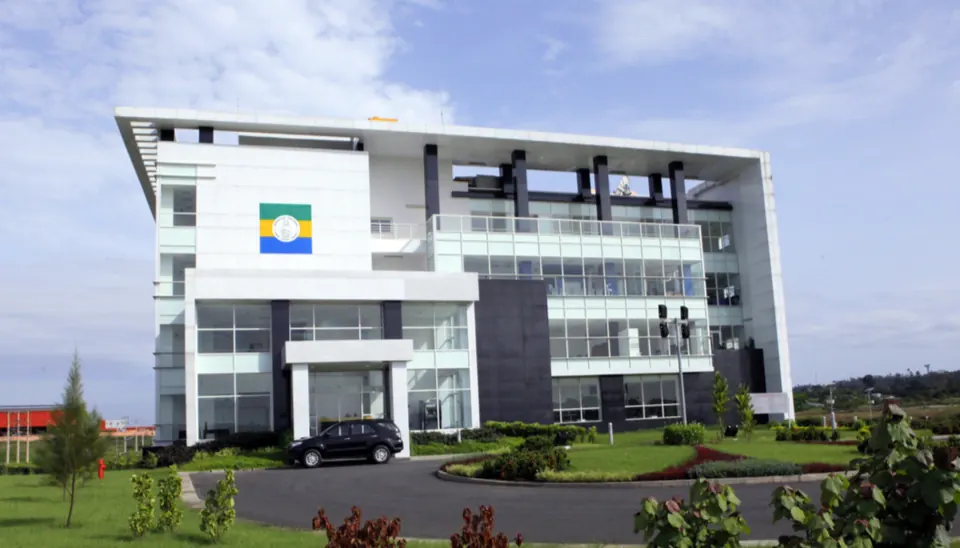
Gabon's special economic zones were first called privileged-regime economic zones (ZERP), then special investment zones (ZIS). Each zone is created by decree and entrusted to a development and management body that builds roads and utilities, leases land, receives investors and grants the approval giving access to the special regime. For the Nkok, Ikolo and Mpassa-Lebombi zones, this body is Gabon Special Economic Zone (GSEZ), a company set up in 2010 through a public-private partnership between the State and the Olam group, now majority-owned by Arise IIP.
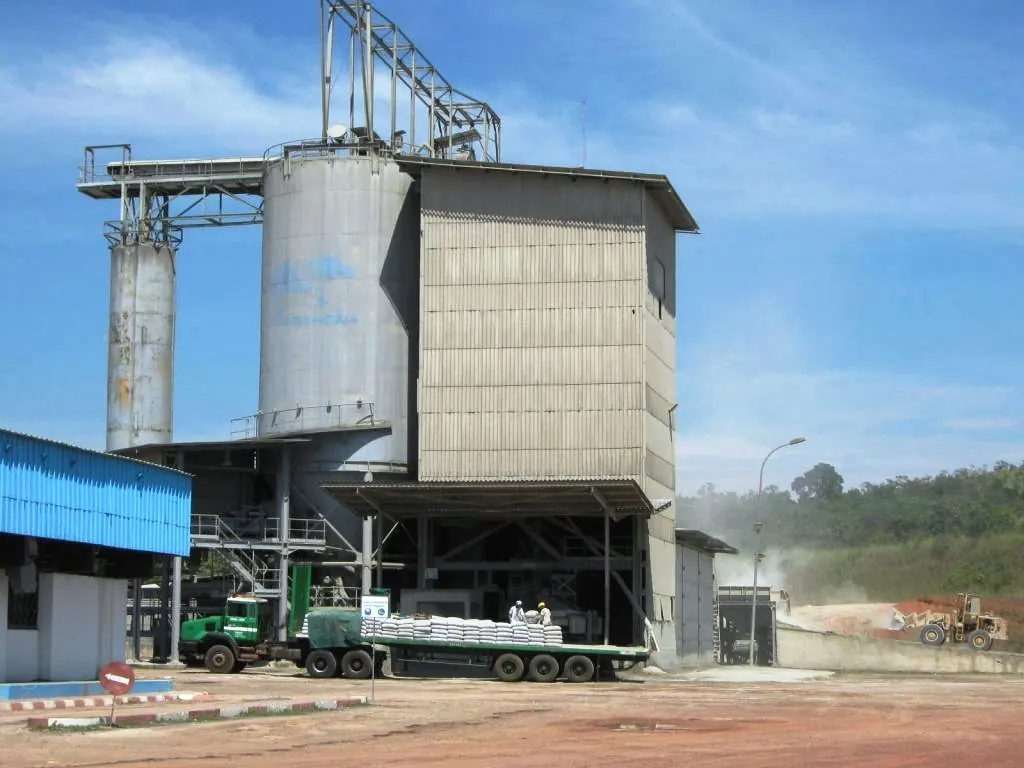
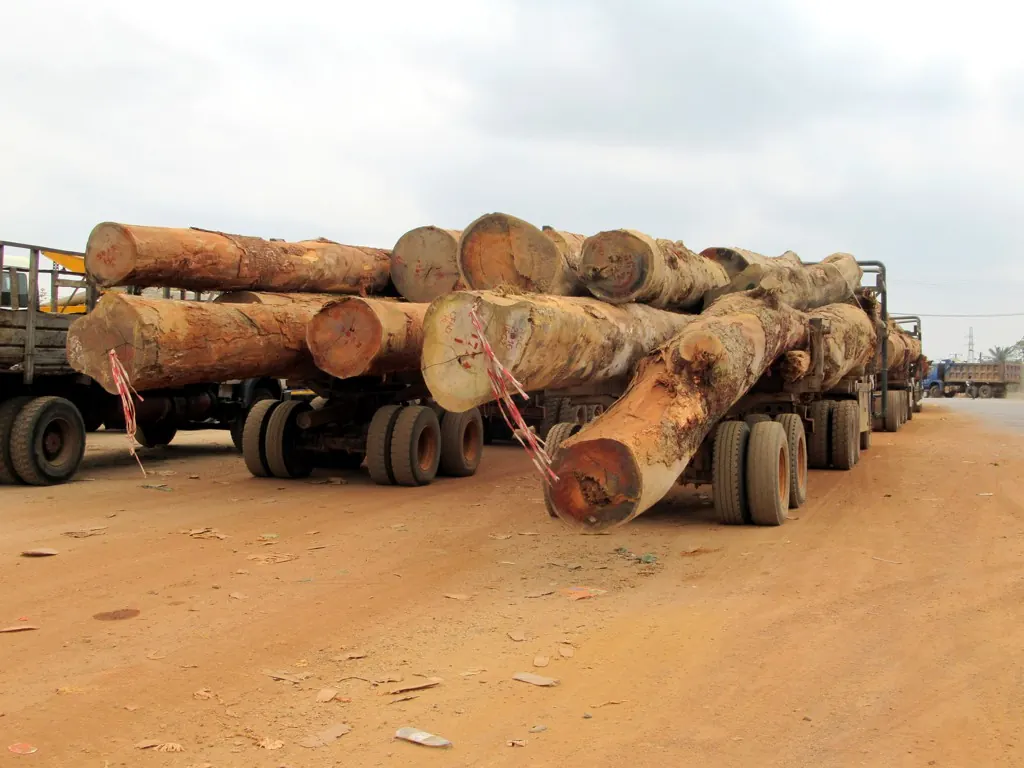
The zones serve a policy of processing raw materials locally, timber first of all. The Nkok zone now hosts a large share of Gabon's processed wood industry.
The Nkok special investment zone
Created in October 2010, the Nkok zone lies 27 kilometres from Libreville near Ntoum, along national road 1 and the Trans-Gabon railway, close to the Owendo ports. It is developed and run by GSEZ, owned 61.5% by Arise IIP and 38.5% by the State through the Deposits and Consignments Fund. The first company started operating there in 2014. The zone was certified carbon neutral in 2021.
Across 1,126 hectares, 600 of them developed, the zone has industrial, commercial and residential areas. Wood (sawmilling, veneer, plywood, furniture) remains its core, but GSEZ also lists pharmaceuticals, cement and concrete, resins and chemicals, recycling of metals, plastics and oils, gas bottling, beverages, food processing and a gold refinery. Shared services include a one-stop shop, a power plant, water supply, a sewage plant, a rail siding, a container depot, banks and a health centre.
A decree of 7 March 2023 reorganised the zone, which became a special investment zone. In February 2025, according to Gabonreview, the steel group Prometal signed a 150 billion CFA franc, five-year investment agreement to set up there.
Economic zones and logistics access
- Border post, Railway
- Port
- Road corridor
- Special economic zone
The map cannot be displayed in this browser. The list of places remains available.
List of places (14)
- Doussala border post (Congo) Border post
- Eboro border post (Cameroon) Border post
- Meyo-Kyé border post (Equatorial Guinea and Cameroon) Border post
- Owendo Mineral Port (Arise P&L) Port
- Port of Port-Gentil Port
- Libreville Port-Môle Port
- Port of Owendo (commercial port and container terminal) Port
- Owendo mineral port (Comilog) Port
- Acaé secondary port (Libreville) Port
- Trans-Gabon railway (Owendo-Franceville) Railway
- Libreville-Ndjolé-Oyem-Bitam-Cameroon border corridor Road corridor
- Libreville-Ntoum-Cocobeach road Road corridor
- Libreville-Lambaréné-Mouila-Ndendé-Congo border corridor (RN1) Road corridor
- Nkok Special Investment Zone Special economic zone
Other zones
Ikolo (Lambaréné, Moyen-Ogooué)
Resulting from an agreement signed in June 2021 between the State and Arise IIP, the Ikolo zone lies 1.5 kilometres from Lambaréné. It has 318 developed hectares and 522 hectares of preserved green space. The first unit started in January 2022 and GSEZ reports 750 direct jobs at the end of 2022. It focuses on sawmilling, veneer and plywood, and is also open to agro-processing, chemicals and recycling.
Mpassa-Lebombi (Haut-Ogooué)
Created by decree no. 0122/PR/MPIPPPAEA of 12 May 2022, this 1,432.5-hectare zone is intended for wood processing and eucalyptus plantations, according to Arise IIP.
Port-Gentil (Mandji island)
The Port-Gentil special economic zone on Mandji island stems from a partnership agreed in 2011 between the State and the Olam group. According to Gabonreview, its first company, sawmilling firm Friends Timber Company, set up there in 2018 with announced output of 3,000 m³ of sawn timber a month. The zone also targets fish processing, storage and assembly.
Privileged-regime and special investment zones
| Zone | Province | Launch | Area | Main focus |
|---|---|---|---|---|
| Nkok | Estuaire | 2010 | 1,126 ha | Wood and diversified industries |
| Port-Gentil (Mandji island) | Ogooué-Maritime | 2011 | Not published | Wood, fisheries, storage |
| Ikolo | Moyen-Ogooué | 2021 | 318 ha developed and 522 ha preserved | Sawmilling, veneer, plywood |
| Mpassa-Lebombi | Haut-Ogooué | 2022 | 1,432.5 ha | Wood and eucalyptus plantations |
Legal framework
- Law no. 010/2011 of 18 July 2011 regulating privileged-regime economic zones in the Gabonese Republic. It sets out the principle of the zones, the role of the development and management body and investor approval. It was amended by ordinance no. 017/PR/2013 of 21 February 2013.
- Law no. 036/2018 of 8 February 2019 regulating special investment zones, which amended the 2011 regime.
- Decree no. 0461/PR/MPITPTHTAT of 10 October 2012 creating and organising the Nkok special economic zone, amended by decree no. 0018/PR/MPIPPPAEA of 7 March 2023 reorganising the zone.
- Decree no. 0122/PR/MPIPPPAEA of 12 May 2022 creating and organising the Mpassa-Lebombi special investment zone.
- At regional level, regulation no. 2/96-UDEAC-1297-57 of 1 July 1996 governs free zones within the Central African customs area.
Reference texts
-
Special economic zones law
Loi n° 010/2011 du 18 juillet 2011 portant réglementation des zones économiques à régime privilégié en République gabonaise
-
Decree creating the Mpassa-Lebombi special investment zone
Décret n° 0122/PR/MPIPPPAEA du 12 mai 2022 portant création et organisation de la zone d'investissement spéciale Mpassa-Lebombi
-
Investment charter
Loi n° 15/98 du 23 juillet 1998 instituant la Charte des investissements en République gabonaise
-
CEMAC customs code
Règlement n° 05/19-UEAC-010A-CM-33 du 22 mars 2019 portant révision du Code des douanes de la CEMAC
Tax and customs incentives
The 2011 and 2018 laws provide for special commercial, tax, customs and social regimes, both for the management body and for investors. The level of incentives depends on the type of approval: holders of a ZERP approval automatically receive the preferential regime set by law, while other companies in a ZIS obtain a preferential regime for 10 to 25 years, depending on the sector, the amount invested and the impact on jobs. Companies that are not eligible can set up in the industrial area without the preferential tax and customs regime.
Arise IIP presents the incentives available in its zones as follows:
- 0% corporate income tax;
- 0% property tax;
- exemption from value added tax (VAT);
- customs duty exemption on imported equipment and machinery;
- 100% repatriation of capital and profits.
Exact durations and conditions are set in each company's agreement and approval. Investors should check them with the management body before making a decision.
Setting up in a zone
- First contact with the management body. For Nkok, Ikolo and Mpassa-Lebombi this is GSEZ, which presents the available land, infrastructure and lease terms.
- Approval application. The management body reviews the application for admission to the zone regime. The approval sets out the regime that applies to the company.
- Company creation. Incorporation and registration go through the one-stop shop at the Nkok zone or the one run by the National Investment Promotion Agency (ANPI-Gabon) in Libreville, opened on 15 January 2018 and advertising company creation in 24 hours, according to Info Afrique.
- Contracts and installation. Lease of land or buildings, utility connections, then sector permits (environment, forestry where relevant).
- Operations and monitoring. Goods movements are checked by the management body and customs under the zone regime.
Setting up a company in Gabon
Steps, documents and timelines to create a company, before or after approval in a zone.
Contacts and sources
-
Gabon Special Economic Zone (GSEZ) (opens in a new tab)
Development and management body for the Nkok and Ikolo zones.
-
Arise IIP, GSEZ project (opens in a new tab)
Overview of the zones, results and incentives.
-
Law no. 010/2011 on ECOLEX (opens in a new tab)
Record and text of the privileged-regime zones law.
Sources
11 sources cited
- GSEZ Nkok (opens in a new tab)
- GSEZ Ikolo (opens in a new tab)
- Gabon Special Economic Zone - GSEZ (opens in a new tab)
- Gabon : les exportations portées par la ZIS de Nkok, de 49 milliards en 2018 à 307 milliards de FCFA en 2022 (opens in a new tab)
- Droit de réponse de la ZIS de Nkok à Info241 (avril 2024) (opens in a new tab)
- Loi n°010/2011 du 18 juillet 2011 portant règlementation des zones économiques à régime privilégié en République gabonaise (opens in a new tab)
- Zesp : la première entreprise s'installe (opens in a new tab)
- ANPI Gabon, un guichet unique d'affaires à Libreville (opens in a new tab)
- Zone économique à régime privilégié de Nkok (opens in a new tab)
- Le Groupe Prometal investit 150 milliards FCFA pour industrialiser le Gabon (opens in a new tab)
- Gabon Special Economic Zone (opens in a new tab)