Territory and population
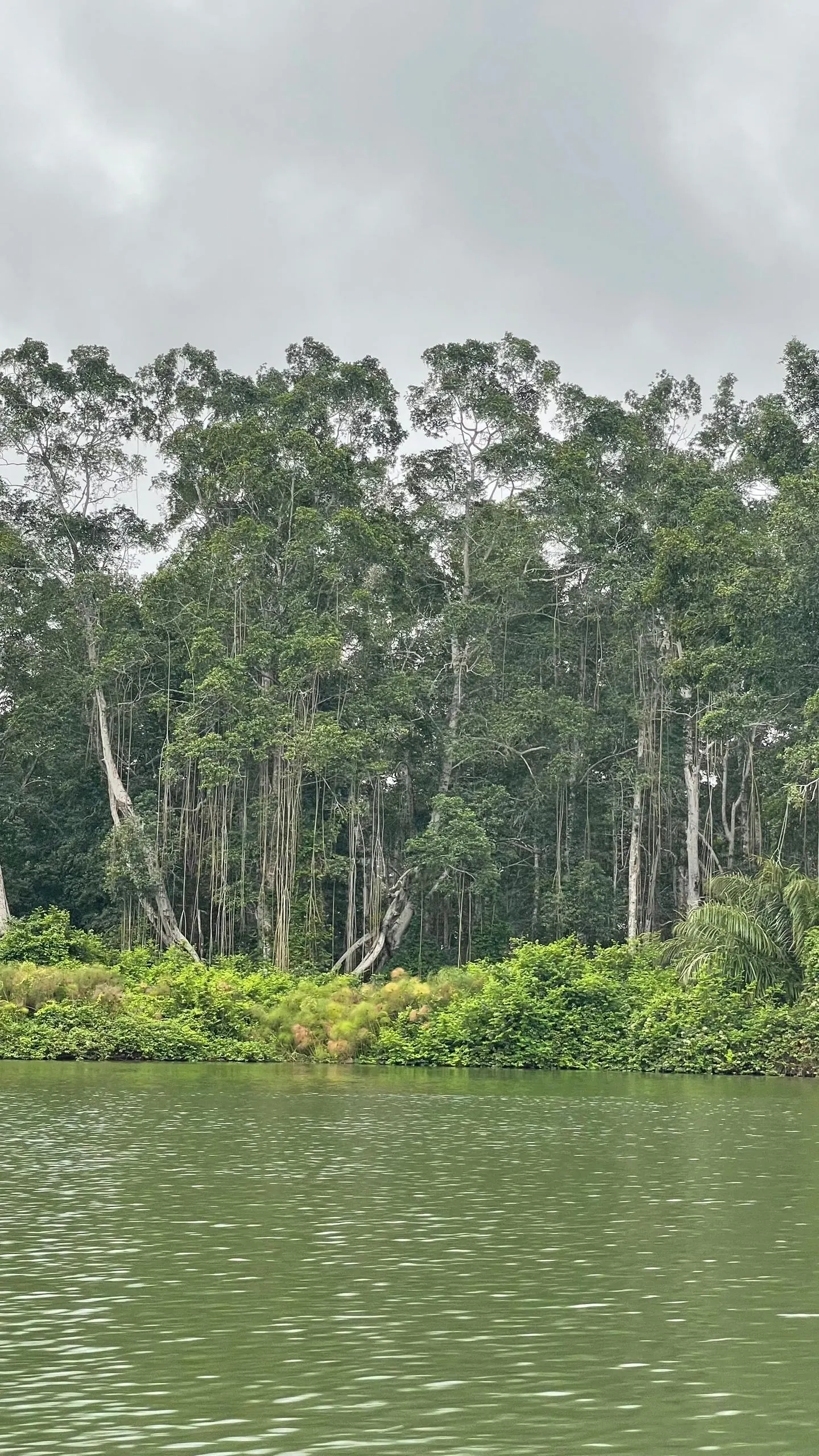
Nyanga covers 21,285 km², about 7.95% of the national territory, making it the seventh-largest province. It takes its name from the Nyanga river. Its landscape combines the forested hills of the Ikoundou massif in the north-east, a central plateau covered with shrub savannah and, in the west, a strip of wet savannah along the Atlantic coast.
The 2013 general population and housing census (RGPL) counted 52,854 inhabitants (2.5 people per km²), making it the least populated province in the country. The 2026 census results, validated by the Constitutional Court on 27 August 2026, report 68,215 inhabitants; Nyanga remains the least populated of the nine provinces. These national results are well above United Nations and World Bank estimates and have been debated in the Gabonese press.
The province has six departments. In 2013 Mougoutsi (Tchibanga) had 31,789 inhabitants, about 60% of the provincial population, ahead of Basse-Banio (Mayumba, 7,192). The other department capitals are Moabi (Douigny), Mabanda (Doutsila), Moulengui-Binza (Mongo) and Ndindi (Haute-Banio).
Economic activities
The province's subsoil holds several identified resources, including oil, iron ore (the Dourekiki deposit), marble (Doussiégoussou, worked for many years) and indications of diamonds, nickel and copper. The Lucina oil terminal lies offshore from Mayumba.
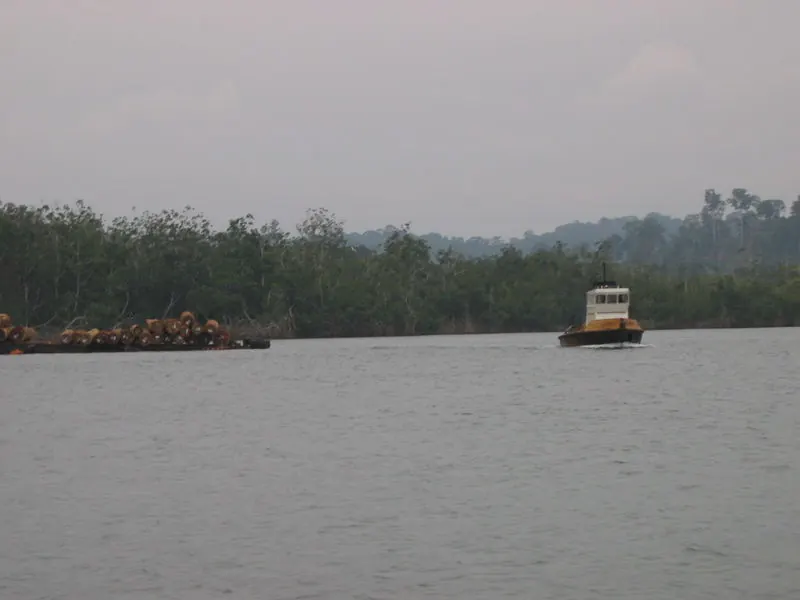
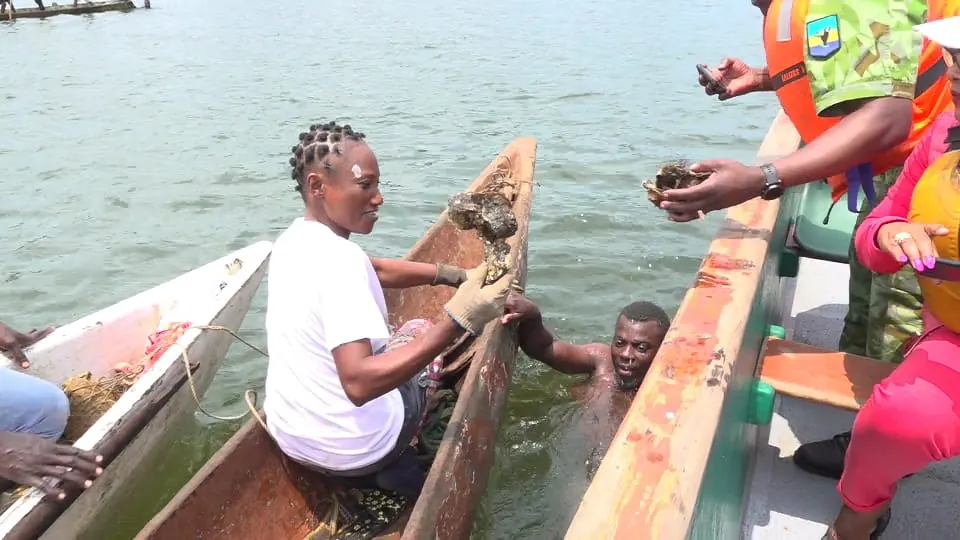
The forest supplies commercial species such as okoumé, moabi and padouk. In Mayumba, coffee, cocoa and rubber long drove the local economy, before logging and wood processing took over. The town's activity now rests mainly on trade in consumer goods and on the sale of fish caught in the Banio lagoon and at sea.
Infrastructure
Tchibanga, 408 km south-east of Libreville, is served by the N6 national road and has an airport. The N6 links Mayumba, on the coast, to Lastoursville in Ogooué-Lolo, via Tchibanga. Mayumba also has an airfield.
Building port facilities at Mayumba, a site already used for trade with Europeans in the 16th century, has been discussed for many years. The project has been postponed, as its economic viability has not been established.
National parks and environment
Two of Gabon's thirteen national parks are in Nyanga:
- Mayumba National Park (about 965 km²): a narrow strip of beaches, dunes, savannah and forest between Mayumba and the Congolese border. It protects about 60 km of leatherback turtle nesting beaches and extends 15 km out to sea, where it shelters dolphins, sharks and migrating humpback whales. It is the country's main marine park.
- Moukalaba-Doudou National Park (about 4,458 km²): humid rainforest and savannah, with one of the highest primate densities in Gabon. The World Wide Fund for Nature (WWF) has run a programme there since 1996, and the site has been on UNESCO's World Heritage tentative list since 2005.
The parks are managed by the national parks agency (ANPN).
Further reading
-
National parks of Gabon (opens in a new tab)
List of the thirteen parks, with province and area.
-
Mayumba National Park (opens in a new tab)
Overview of the coastal and marine park.
-
2013 census overall results (opens in a new tab)
Publication by the national statistics office (PDF).
Province indicators
Places and facilities
Facilities, sites and towns of Nyanga province
- Airport, Oil terminal
- City, National park
The map cannot be displayed in this browser. The list of places remains available.
List of places (7)
- Mayumba Airport Airport
- Tchibanga Airport Airport
- Mayumba City
- Tchibanga City
- Mayumba National Park National park
- Moukalaba-Doudou National Park National park
- Etame terminal Oil terminal
Sources
13 sources cited
- Nyanga (Gabon) (opens in a new tab)
- Nyanga Province (opens in a new tab)
- Tchibanga (opens in a new tab)
- Tchibanga (opens in a new tab)
- Mayumba (opens in a new tab)
- Parc national de Mayumba (opens in a new tab)
- Moukalaba-Doudou National Park (opens in a new tab)
- Parcs nationaux du Gabon (opens in a new tab)
- Résultats globaux du recensement général de la population et des logements de 2013 (RGPL 2013) (opens in a new tab)
- Gabon : 62 % de la population concentrée dans l'Estuaire, l'urgence de repeupler l'intérieur du pays (opens in a new tab)
- RGPL : le Gabon face à sa nouvelle géographie (opens in a new tab)
- RGPL 2026 : 3,5 millions d'habitants, le grand bond démographique qui demande des explications (opens in a new tab)
- General Directorate of Statistics of Gabon (opens in a new tab) Total population